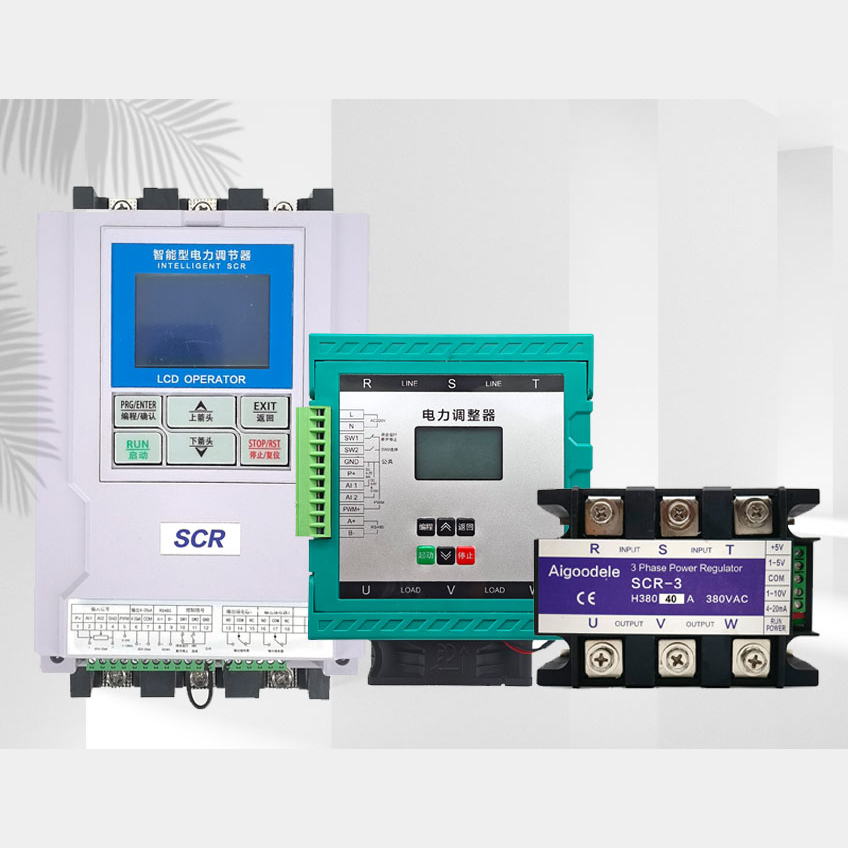

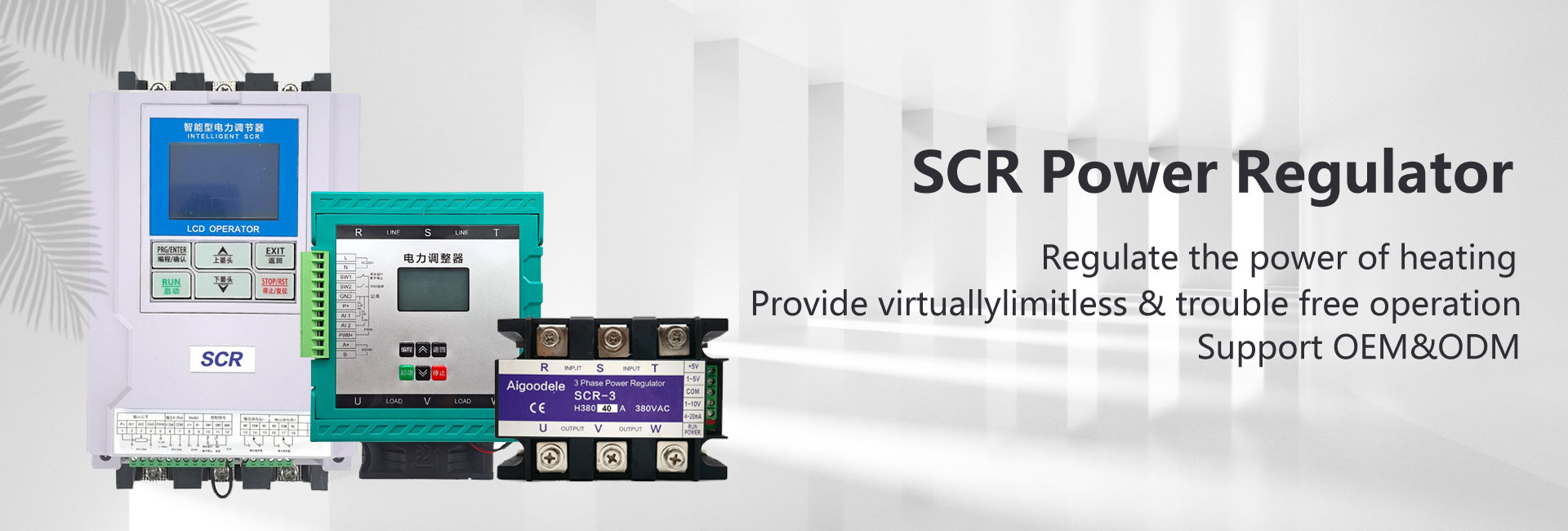
SCR Power Controllers / SCR Power Regulators – Precise Industrial Power Control

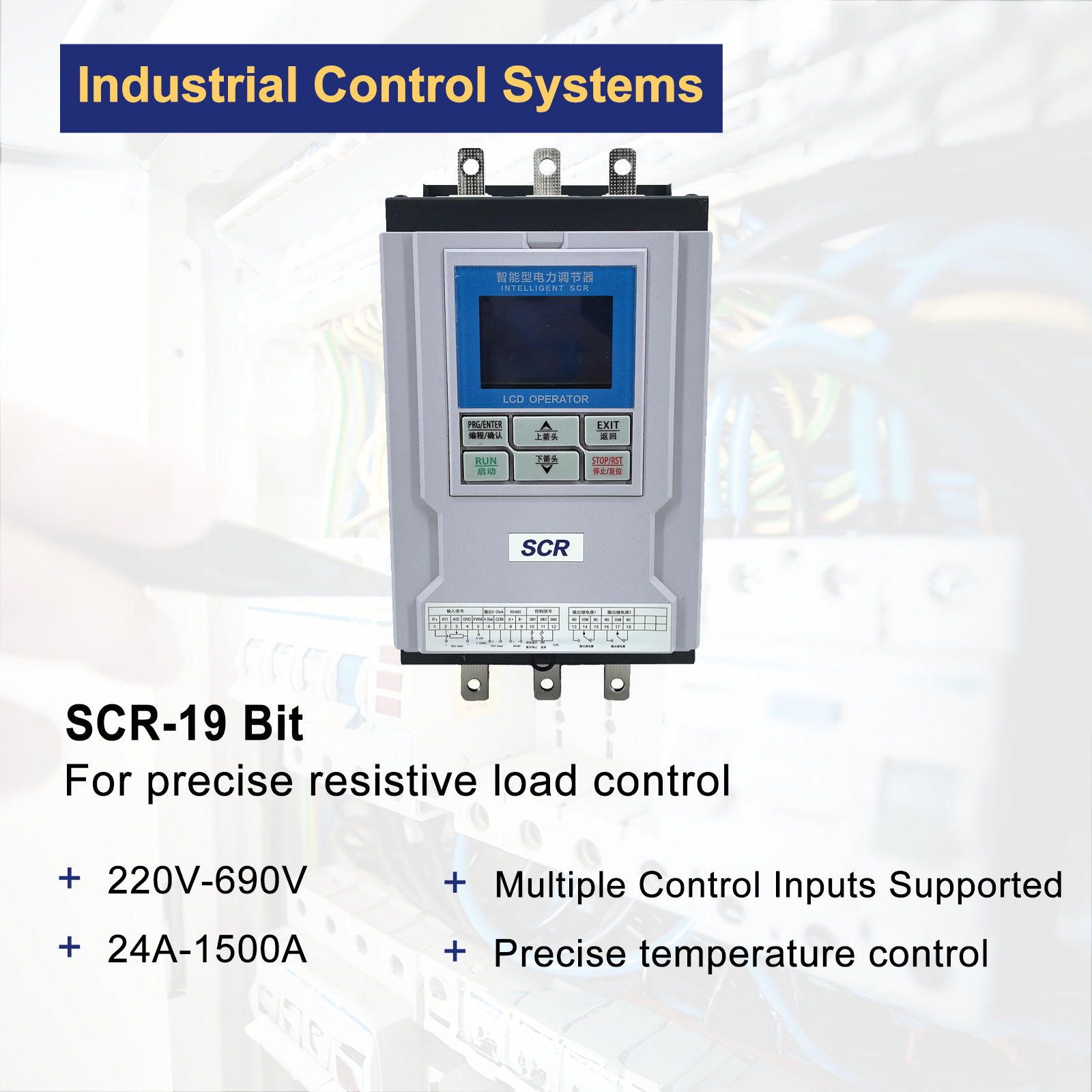
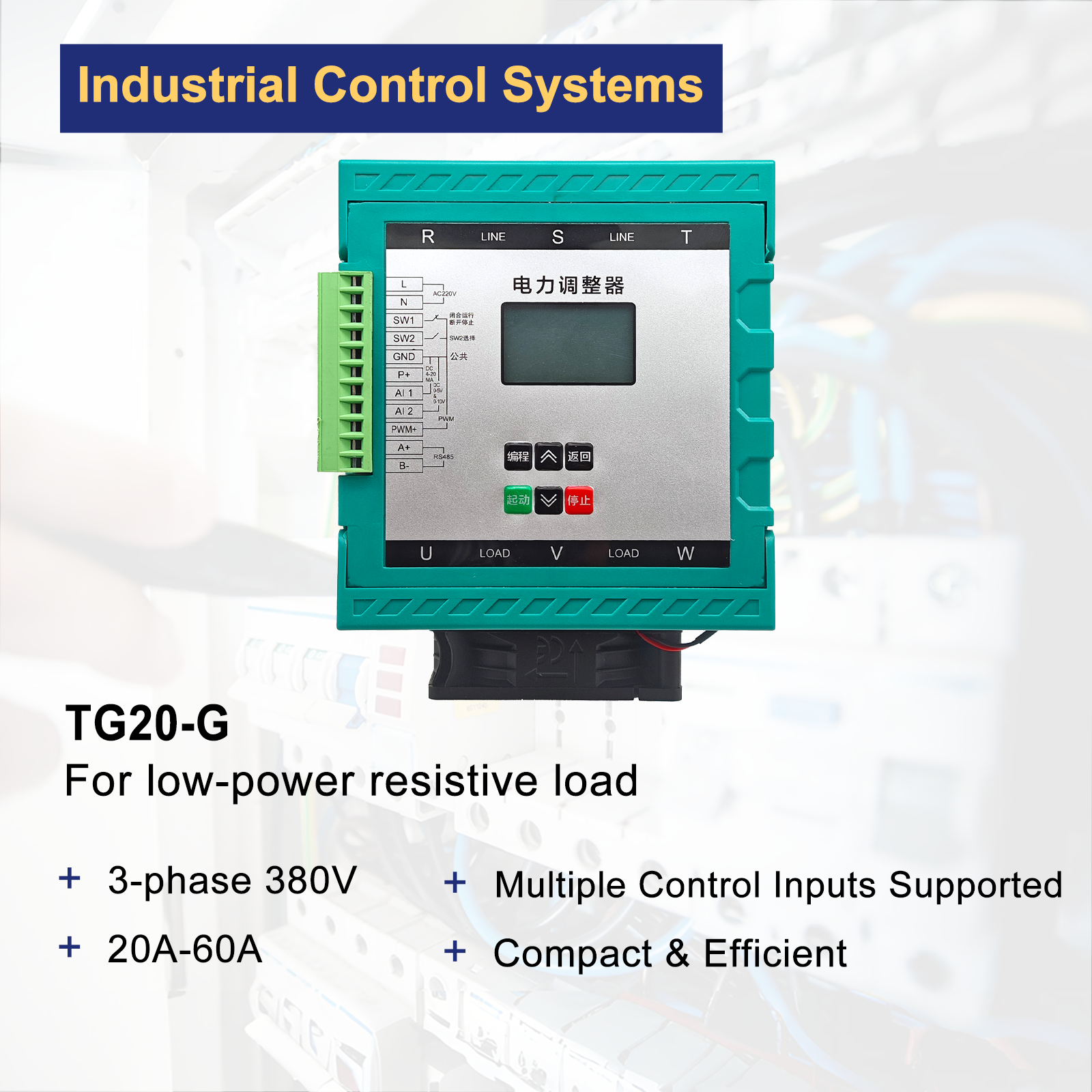
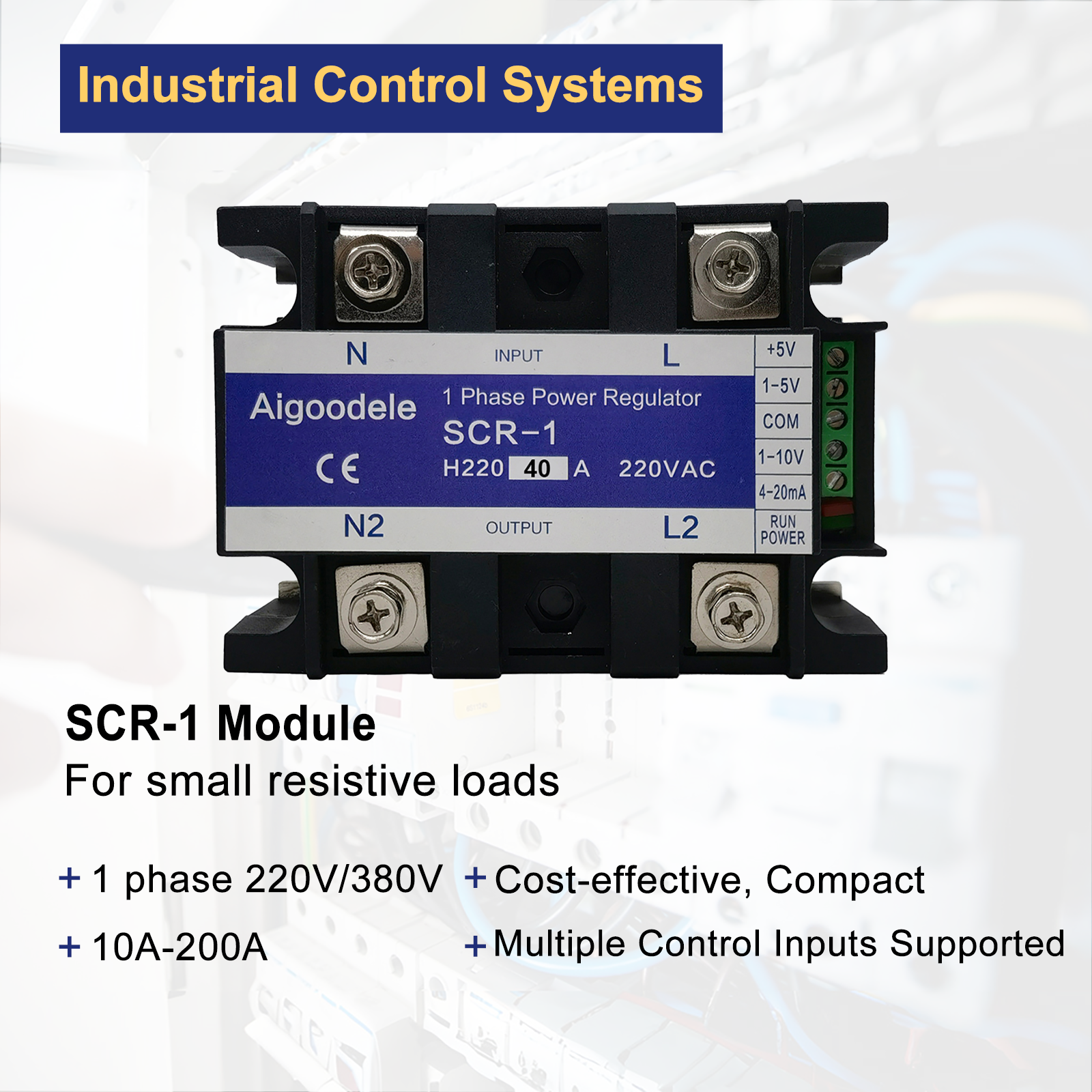
SCR Power Controllers (also known as SCR Power Regulators) use Silicon Controlled Rectifiers to regulate AC power output for industrial heating and resistive load applications. Supporting phase-angle and zero-cross control modes, they are suitable for furnaces, ovens, kilns, and temperature control systems. Optional DC output available upon request.

SCR Power Regulator Selection Guide

Choose the right SCR power regulator for your heating application based on voltage, current, and load requirements.
Key Advantages

  • Precise power regulation — phase-angle and zero-cross control modes for accurate output adjustment in industrial heating and resistive load applications
  • Fast switching response — suitable for temperature-sensitive processes requiring rapid power adjustment
  • High surge current capability — designed for heavy industrial loads and frequent switching in demanding environments
  • Wide control signal compatibility — supports 0–10V, 4–20mA, and potentiometer input for integration with PLCs and automation systems
  • Heatsink-mounted design — supports natural and forced air cooling for continuous high-current operation
  • Optional DC output available upon request for custom application requirements
  • Precise power regulation — phase-angle and zero-cross control modes for accurate output adjustment in industrial heating and resistive load applications
  • Fast switching response — suitable for temperature-sensitive processes requiring rapid power adjustment
  • High surge current capability — designed for heavy industrial loads and frequent switching in demanding environments
  • Wide control signal compatibility — supports 0–10V, 4–20mA, and potentiometer input for integration with PLCs and automation systems
  • Heatsink-mounted design — supports natural and forced air cooling for continuous high-current operation
  • Optional DC output available upon request for custom application requirements

Applications

  • Industrial Heating Systems — SCR power regulators are used in electric furnaces, industrial ovens, kilns, drying systems, and heating elements requiring accurate temperature control
  • Plastic & Rubber Processing — provide heating power for extrusion equipment, injection molding machines, and rubber vulcanization systems
  • Glass, Metal & Ceramic Processing — used for resistive heating in glass manufacturing, metal heat treatment, and ceramic sintering systems
  • Temperature Control Systems — integrated with PID controllers for closed-loop temperature regulation in industrial processes
  • Automation & Power Control Systems — integrated into voltage regulation systems and industrial process control cabinets
  • Industrial Heating Systems — SCR power regulators are used in electric furnaces, industrial ovens, kilns, drying systems, and heating elements requiring accurate temperature control
  • Plastic & Rubber Processing — provide heating power for extrusion equipment, injection molding machines, and rubber vulcanization systems
  • Glass, Metal & Ceramic Processing — used for resistive heating in glass manufacturing, metal heat treatment, and ceramic sintering systems
  • Temperature Control Systems — integrated with PID controllers for closed-loop temperature regulation in industrial processes
  • Automation & Power Control Systems — integrated into voltage regulation systems and industrial process control cabinets

Specifications

Parameter Specification
Input Voltage 220V / 380V / 440V / 480V / 660V / 690V AC
Frequency 50Hz / 60Hz
Phase Type Single-phase / Three-phase
Rated Current 10A – 1000A (depending on model)
Rated Power 1kW – 1000kW
Control Mode Phase-angle control / Zero-cross control
Trigger Signal 4–20mA / 0–5V / 0–10V / Potentiometer
Load Type Resistive load
Output Type AC output / Optional DC output
Response Time Fast switching response
Cooling Method Natural cooling / Forced air cooling
Communication RS485 Modbus (optional)
Protection Functions Overcurrent, overheat, phase loss, overvoltage
Ambient Temperature -20°C to +60°C
Humidity <95% RH, non-condensing
Installation Method Panel mount / Cabinet installation
IP Rating IP20
Application Environment Indoor industrial environment
Parameter Specification
Input Voltage 220V / 380V / 440V / 480V / 660V / 690V AC
Frequency 50Hz / 60Hz
Phase Type Single-phase / Three-phase
Rated Current 10A – 1000A (depending on model)
Rated Power 1kW – 1000kW
Control Mode Phase-angle control / Zero-cross control
Trigger Signal 4–20mA / 0–5V / 0–10V / Potentiometer
Load Type Resistive load
Output Type AC output / Optional DC output
Response Time Fast switching response
Cooling Method Natural cooling / Forced air cooling
Communication RS485 Modbus (optional)
Protection Functions Overcurrent, overheat, phase loss, overvoltage
Ambient Temperature -20°C to +60°C
Humidity <95% RH, non-condensing
Installation Method Panel mount / Cabinet installation
IP Rating IP20
Application Environment Indoor industrial environment

FAQs

What is an SCR Power Controller?


An SCR Power Controller (also called SCR Power Regulator or Thyristor Power Controller) uses silicon controlled rectifiers to regulate AC power output for industrial heating and resistive load applications. It controls output by adjusting the SCR firing angle, enabling precise power and temperature regulation.

What is the difference between phase-angle control and zero-cross control?

Phase-angle control adjusts output continuously each half-cycle — suitable for precise temperature regulation. Zero-cross control switches complete half-cycles on and off — reduces electrical noise and suits transformer loads.

What applications are SCR Power Controllers suitable for?


Electric furnaces, industrial ovens, kilns, drying systems, plastic extrusion, rubber vulcanization, glass manufacturing, ceramic sintering, and temperature control cabinets.

How do I select the right SCR Power Controller?


Select based on load type, supply voltage, control method (phase-angle or zero-cross), and current rating. Choose a current rating at least 1.3× your actual load current to ensure reliable continuous operation. Send us your load specifications for a free selection recommendation.

Can SCR Power Controllers integrate with PLC or automation systems?

Yes. Supported control signal inputs include 0–10V, 4–20mA, and potentiometer, compatible with PLC outputs and PID temperature controllers.

What protections are included?


Overcurrent, overvoltage, and overtemperature protection. Specific features vary by model — contact us for details.

Cart

loading