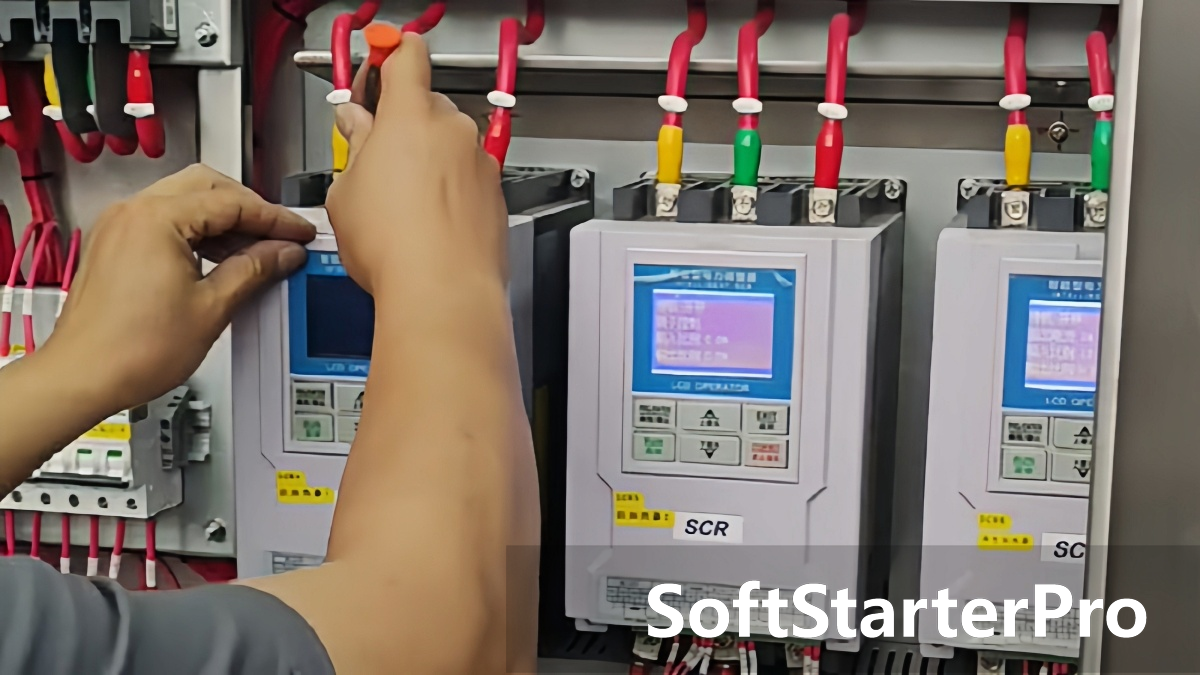

The grounding terminal of an SCR power controller is not optional — it is a mandatory safety requirement. Proper grounding ensures personnel safety, equipment protection, and system stability. This article explains why grounding matters and what happens when it is missing or incorrectly installed.
Why Grounding Is Essential
An SCR power controller is a high-power industrial device operating at 220V or 380V AC. The grounding terminal serves two critical purposes.
First, it provides a fault current discharge path. If internal insulation fails, grounding gives leakage current a safe route to earth rather than through the equipment enclosure or an operator.
Second, it establishes a stable reference potential. Grounding reduces electrical noise and electromagnetic interference, which directly affects the accuracy and stability of power regulation.
What Happens If the Ground Terminal Is Not Connected
Electric Shock Risk
If internal insulation breaks down, the metal enclosure can become energized. Without a grounding path, fault current cannot be safely discharged, and the enclosure may carry full line voltage. Anyone touching the housing is at risk of electric shock.
Equipment Damage and Fire Risk
In the event of an internal short circuit — such as an SCR failure or wiring breakdown — ungrounded systems cannot safely divert excess current. Energy accumulates inside the device, which can burn internal components and ignite surrounding materials.
System Instability and Control Failure
Without a stable electrical reference point, the power regulation system loses accuracy. This can cause unstable output, incorrect temperature control, sensor signal distortion, and unexpected fluctuations that affect production quality.
Failure of Leakage Protection Devices
Grounding is required for RCD (residual current device) protection to function correctly. When a fault occurs, grounding creates the current imbalance that triggers the RCD. Without grounding, leakage current has no discharge path, the RCD may not detect the fault, and the circuit breaker may not trip in time.
Proper Grounding Requirements
Correct installation is as important as making the connection at all. Improper grounding can be as ineffective as no grounding.
Use copper wire sized at a minimum of 2.5mm² for the ground conductor, with larger cross-sections required for higher power systems. Always use yellow-green insulated wire for ground connections — do not substitute with neutral wire.
Ground resistance must meet local electrical safety standards. High resistance grounding provides little protection and should be treated as equivalent to no grounding.
Connect to protective earth (PE) only. Do not confuse the ground terminal with the neutral wire connection — this is a common installation error that eliminates the safety protection grounding is intended to provide.
Conclusion
Grounding is not a formality. In an SCR power controller, it is the primary defense against electric shock, equipment damage, fire, and control failure. Connect the ground terminal correctly before powering on, use the right materials, and verify that ground resistance meets the applicable standard for your installation.
Browse our SCR Power Controllers or contact us for technical support.