Introduction
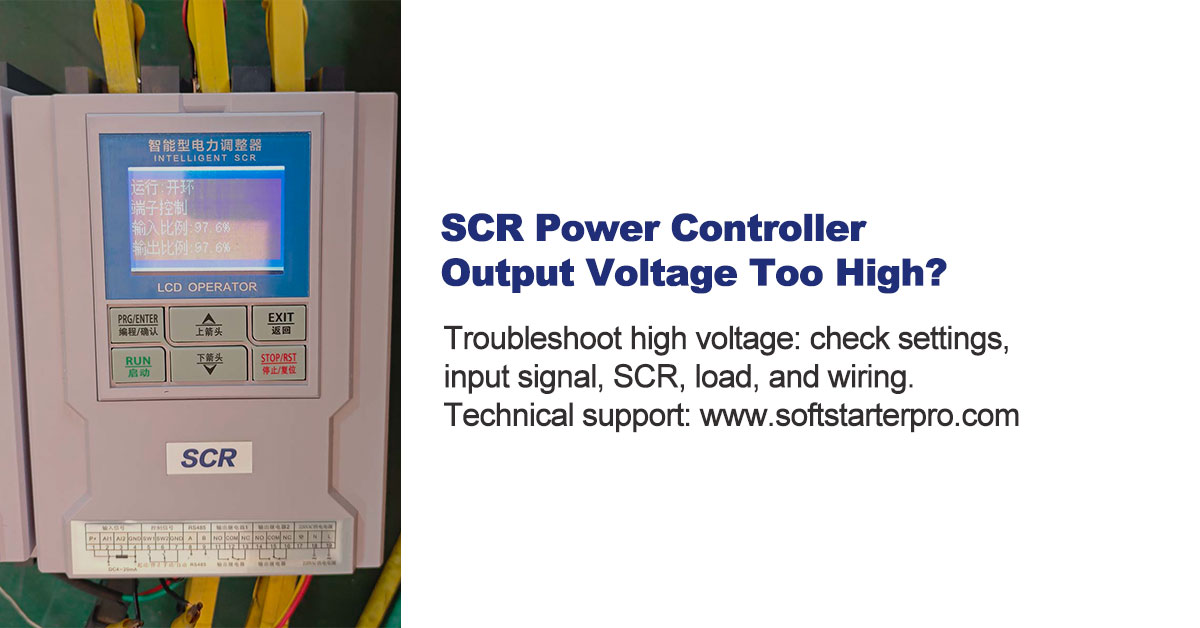
If the output voltage of an SCR power controller is too high, it may lead to equipment damage, unstable operation, or safety risks.
Understanding the root cause and applying the correct solution can help restore stable performance quickly.
1. Check Parameter Settings
Incorrect parameter settings are one of the most common causes.
- Output voltage limit: Ensure it is set within the rated range
- PID parameters: Improper tuning may cause unstable or excessive output
📍 Recheck and adjust parameters based on your application requirements.
2. Verify Input Signal
Abnormal control signals can directly affect output voltage.
- Signal amplitude: Ensure it is within the normal range
- Signal type: Confirm voltage or current signal matches the controller
📍 Mismatch or excessive signals may cause incorrect output behavior.
3. Inspect SCR and Internal Components
Component failure can lead to uncontrolled output.
- SCR (thyristor): Check for short circuit or abnormal conduction
- Driver circuit: Ensure proper triggering and switching
- Other components: Capacitors, resistors, etc.
📍 Replace damaged components if necessary.
4. Check Load Condition
Load issues can significantly impact output voltage.
- Check for short circuit or open circuit
- Ensure load is within rated capacity
📍 Abnormal load conditions may cause voltage fluctuations or spikes.
5. Inspect Wiring and Circuit
Connection problems can also cause abnormal voltage.
- Loose or damaged wiring
- Short circuit or poor contact
📍 Ensure all connections are secure and reliable.
Safety Reminder
Always disconnect power before inspection.
If you are not familiar with electrical systems, contact a professional technician.
Conclusion
High output voltage in SCR power controllers is usually caused by incorrect settings, signal issues, component faults, or load problems.
A systematic check can help you quickly locate and solve the issue, ensuring stable and safe operation.
👉 Need help diagnosing your system? Feel free to contact us for technical support.