Features
-
Advanced internal feedback circuit ensures excellent linearity, stable voltage performance, and strong resistance to high voltage, high current, and high temperatures.
-
Fully isolated weak and strong current circuits provide enhanced safety and reliable control performance.
-
Suitable for a wide range of automated control applications, including chemical processing, food machinery, packaging equipment, textile machinery, CNC machine tools, entertainment equipment, and other industrial automation systems.
| Model | LSCR-1 220V |
| Module Type | Single phase |
| Load Current (Optional) | 10A,25A,40A,60A,80A,100A,120A,150A,200A |
| Load Voltage | 220±15%VAC |
| Ambient Temperature | -20ºC~+75ºC |
| Control Mode (Optional) | 0-5VDC, 0-10VDC,4-20mA,10K |
| On Voltage | ≤2V |
| Off Leakage Current | ≤10mA |
| On-off Time | ≤10mS |
| Dielectric Strength | 2000VAC |
| Certification | CE |
| Insulation Resistance | 500MΩ/500VDC |
| Mounting Method | Bolted |
| Work Instruction | LED |
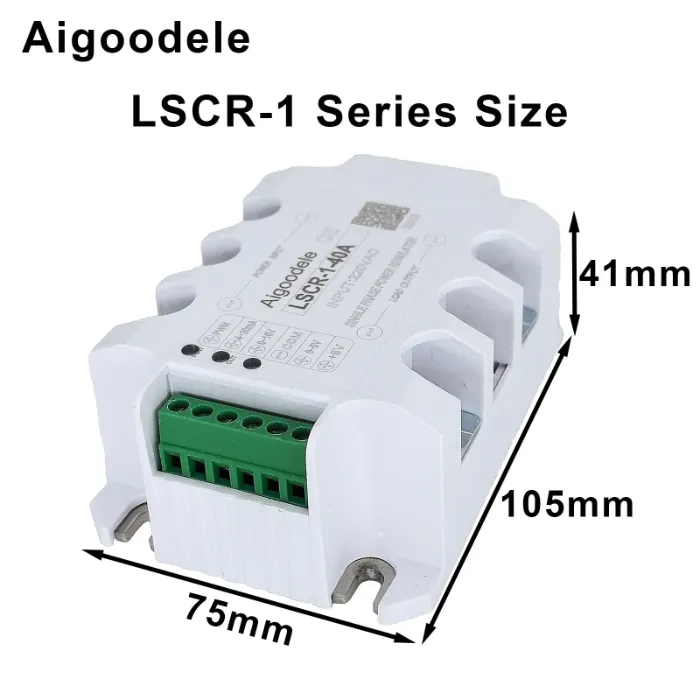
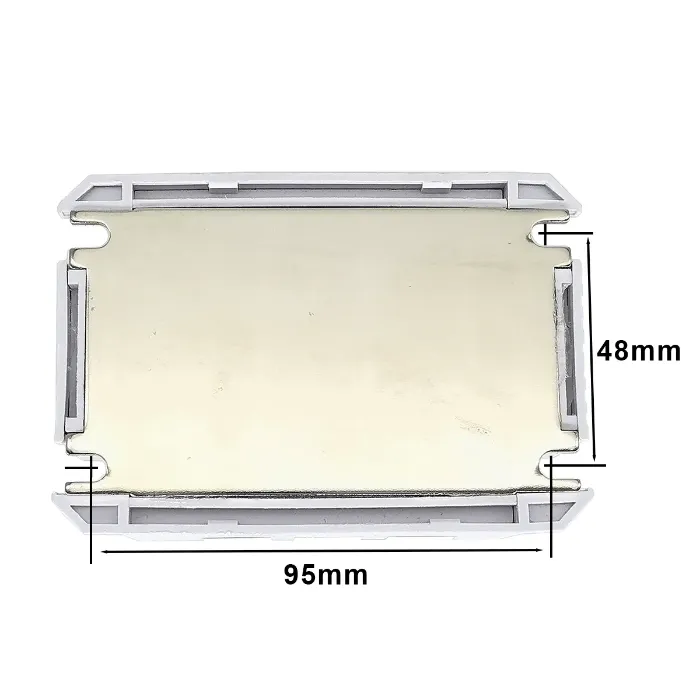
|
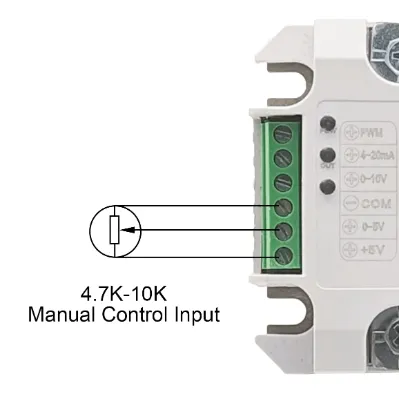
4.7k-10k Manual Control input |
Manual Potentiometer ControlThe module provides a built-in 5V supply for use with a 10KΩ potentiometer. |
|
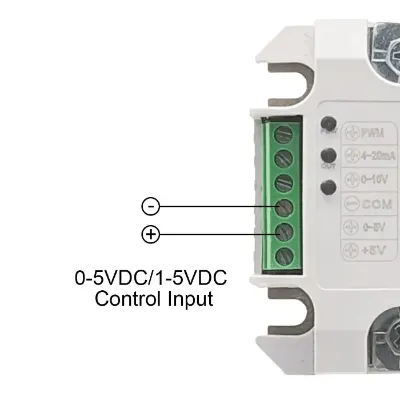
0-5VDC/1-5VDC Control input |
0–5V DC ControlAccepts 0–5V analog signals from a microcontroller. |
|
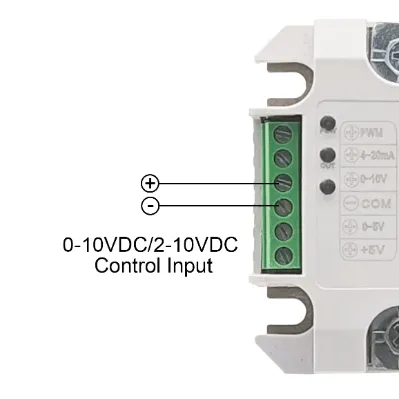
0-10VDC/2-10VDC Control input |
0–10V DC ControlAccepts 0–10V analog signals from PLCs or other controllers. |
|
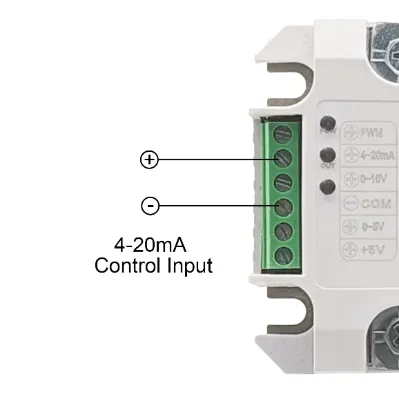
4-20mA Control input |
4–20mA ControlAccepts a 4–20mA analog signal from instruments such as temperature controllers. |
|
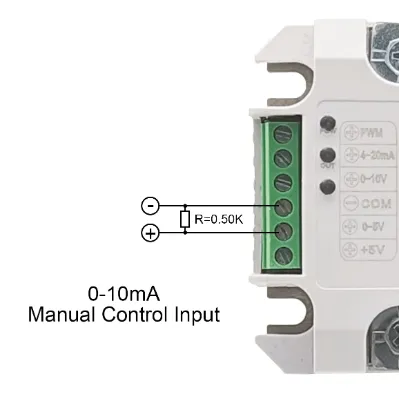
0-10mA Manual Control input |
0–10mA Manual Current ControlAccepts a 0–10mA manual current input. |
|
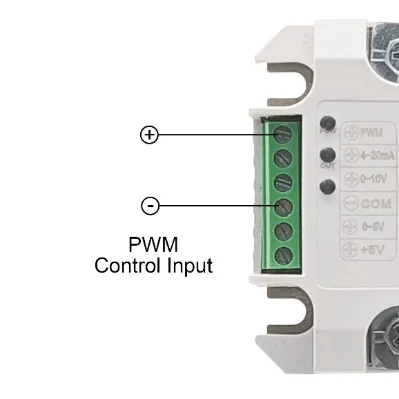
PWM Control input |
PWM ControlAccepts a PWM signal from a microcontroller.
|
Key Notes for Using SCR AC Regulator Modules
-
Correct Polarity: All function terminals must remain positive relative to the COM terminal (negative). Reversed polarity may cause uncontrolled output. A higher control voltage results in a higher main-circuit output.
-
Control Mode Switching: If both automatic (e.g., 4–20 mA) and manual (e.g., 0–5 V) controls are needed, use a double-throw switch to select the mode. When multiple control signals are input simultaneously, the stronger signal will dominate.
-
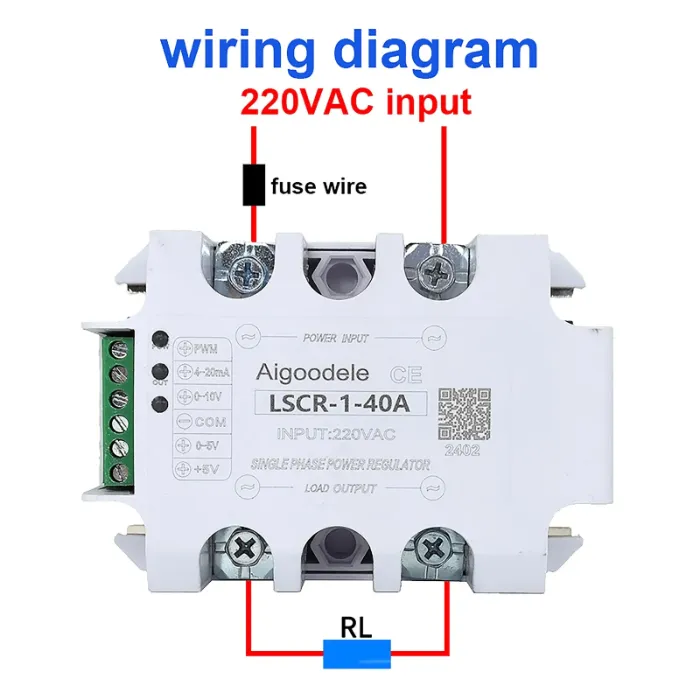
Proper Main Circuit Wiring: Ensure the live (L) and neutral (N) wires are correctly connected. The grid voltage must not be lower than the minimum operating voltage required by the load.
-
Load Limits:
-
Resistive loads ≤ 60% of rated current
-
Inductive or capacitive loads ≤ 40%
-
Motor loads ≤ 20%
-
-
Overcurrent Protection: Overcurrent and short circuits are major causes of irreversible thyristor failure. Always use fast-acting fuses, air switches, or other protective devices.
-
Adequate Heat Dissipation: Install a proper heat sink and enhance cooling in poor ventilation. Never operate the module directly with any short-circuit load.