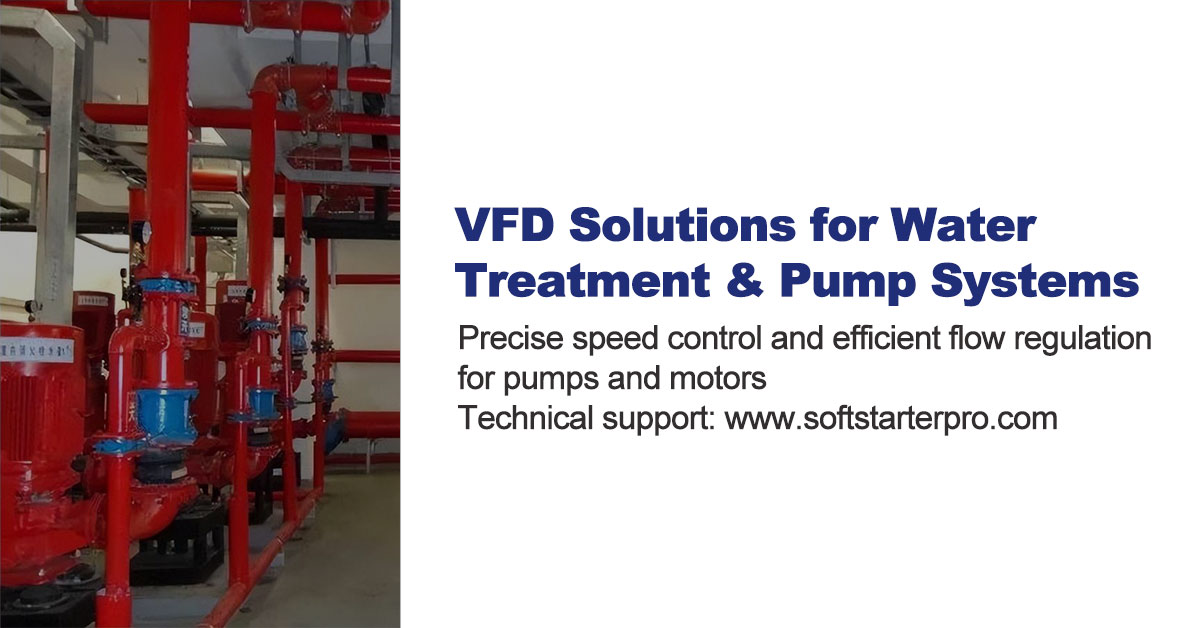
Why Traditional Fixed-Speed Pumps Are Inefficient
Water treatment facilities and pumping systems must deliver stable water flow while minimizing energy consumption and mechanical damage.
Traditional pump motors run at constant speed regardless of actual demand, causing four common problems:
- High energy waste when flow demand is low
- Water hammer due to sudden starts and stops
- Valve and pipeline stress, leading to higher maintenance costs
- Pressure fluctuations that affect system stability
VFD control solves all four problems by dynamically adjusting motor speed to match real-time system demand.
How VFD Control Works for Pump Systems
A VFD converts fixed-frequency AC input to adjustable-frequency, adjustable-voltage AC output. By controlling motor speed in real time, it matches pump output precisely to system demand — eliminating the need to run at full speed when partial flow is sufficient.
The energy impact is significant: reducing motor speed to 80% of rated speed cuts power consumption by approximately 50%, delivering 30–60% energy savings in typical pump applications.
Key Benefits of VFD Control for Pumps
| Feature | Benefit |
| Speed Regulation | Match flow and pressure to real demand |
| Energy Savings | Reduce electricity consumption by 30–60% |
| Soft Acceleration | Eliminate water hammer and pressure surges |
| Motor Protection | Overload, overcurrent, dry-run, phase-loss detection |
| Longer Service Life | Less mechanical stress on motors, pipes, and valves |
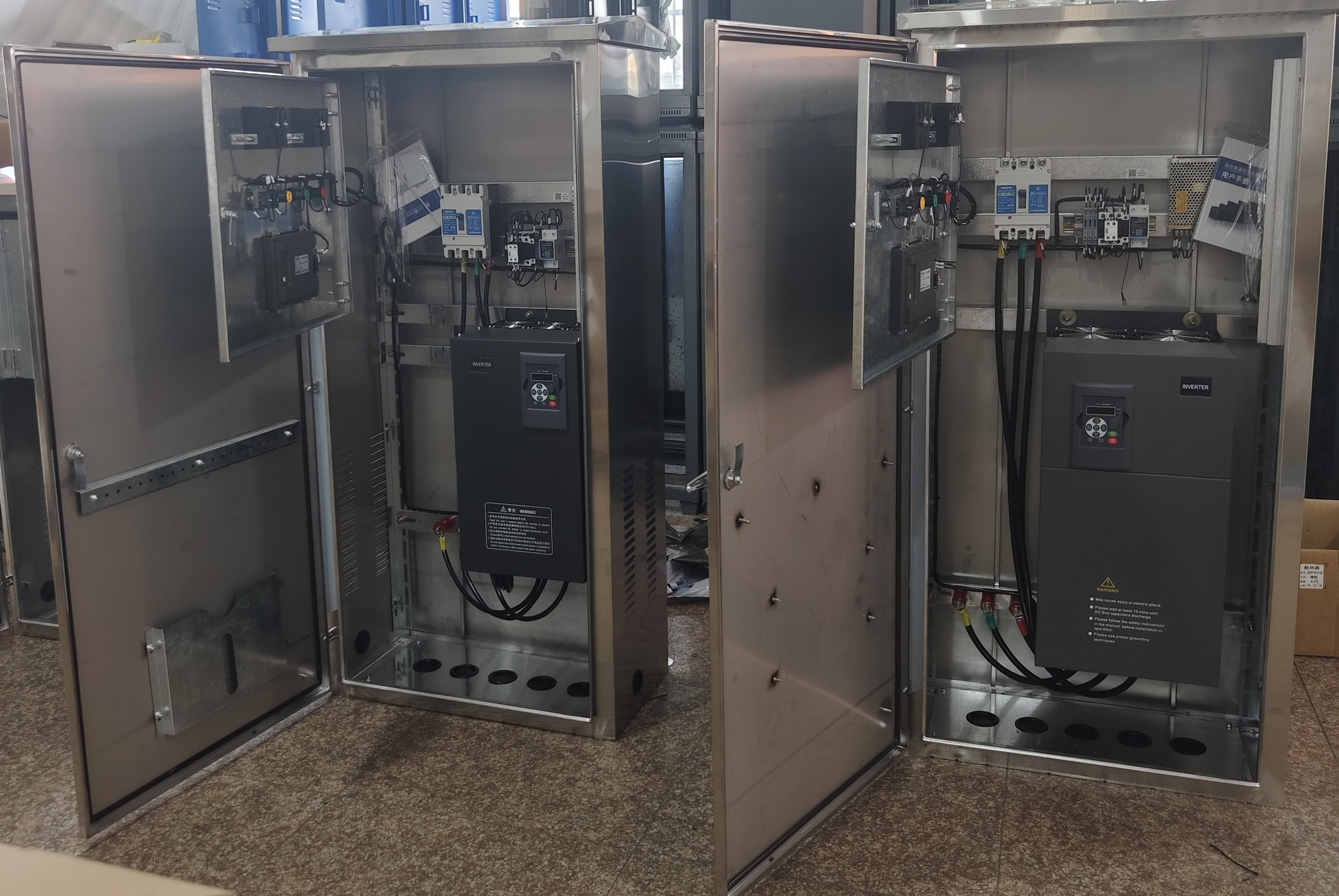
Common Applications
VFD pump control is the standard solution for any system where flow demand varies over time:
- Water treatment plants — stable supply pressure with minimal energy waste
- HVAC chilled water and heating loops — variable flow to match building load
- Irrigation systems — adjustable flow rates for different zones
- Chemical and process industries — precise pressure control for corrosive or viscous fluids
- Booster pump stations — maintain constant pressure across variable demand
- Wastewater and sewage systems — smooth operation reduces pipe stress
When to Choose a Soft Starter Instead
VFDs are the most efficient solution for variable-flow pump systems. However, a soft starter is the better choice when:
- The pump runs at fixed speed and flow rate does not need adjustment
- The priority is reducing startup current and mechanical shock only
- Budget is the primary constraint and variable speed is not required
For fixed-speed pumps below 75kW, a soft starter delivers the same
startup protection at significantly lower cost.
How to Select the Right VFD for Your Pump
1. Match Motor Power and Voltage
Ensure the VFD matches your motor's rated power (kW) and supply voltage (380V / 220V / 480V). Select a VFD rated at least 10–20% above motor nameplate current to handle startup peaks.
2. Consider Load Profile
For variable-flow loads such as pumps and fans, standard V/F control maximizes energy savings. For constant-pressure booster systems, select a VFD with built-in PID control for automatic pressure regulation.
3. Check Environmental Conditions
Select an enclosure rating that matches your installation site — IP20 for indoor panels, IP55 for outdoor or dusty environments.
4. Control and Protection Features
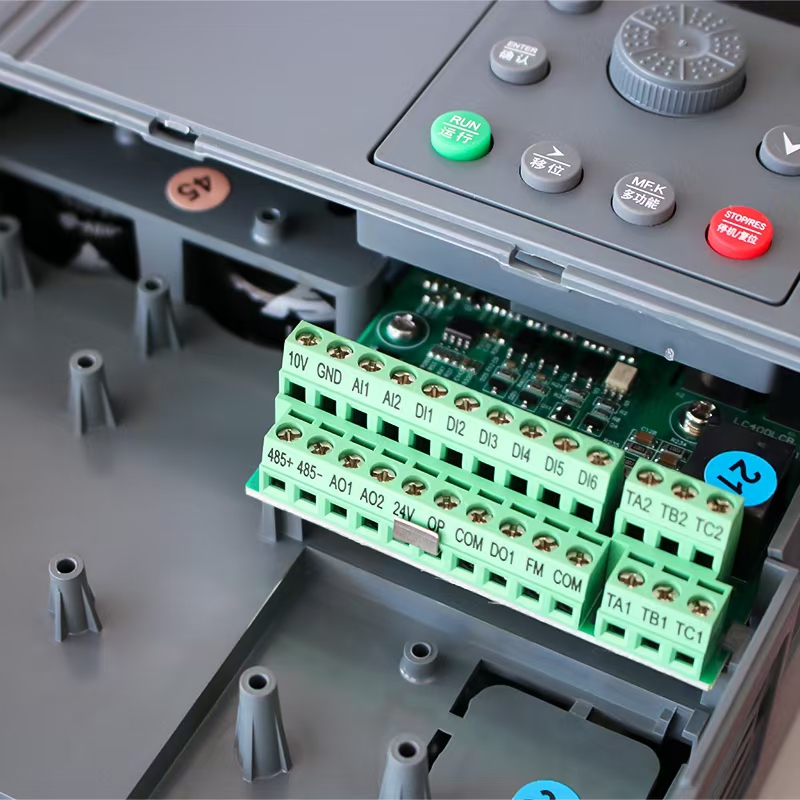
Look for built-in PID control, soft start/stop, dry-run protection, and remote monitoring via Modbus. These features reduce maintenance costs and improve long-term system reliability.
Get the Right VFD Solution for Your Pump System
Send us your motor power (kW), supply voltage, and application, and our engineers will recommend the ideal VFD configuration.
📞 WhatsApp: +86 18006697926
✉ Email: ann@softstarterpro.com
Contact us at softstarterpro.com for a free quote or technical consultation.